Virtual Address for Texas Franchise Tax Filings | PostalNook
Date Published :

Using a Virtual Address for Texas Franchise Tax Filings: What LLC Owners Must Know
Yes, you can use a virtual address for your Texas Franchise Tax filings, including the mandatory Public Information Report (PIR). The Texas Comptroller of Public Accounts requires a valid mailing address for your business entity, its governing members, and its managers. A commercial physical street address provided by a professional virtual mailbox service satisfies state mailing guidelines while keeping your private residence off public state databases.
However, the state distinguishes between a mailing address and a registered agent address. While your franchise tax correspondence and PIR can list a virtual business address, your Texas registered office must still maintain a physical location where a designated agent is present during normal business hours to receive service of process.
Understanding this distinction protects your business identity, ensures timely tax notices, and keeps your personal home address away from public scrapers.
How the Texas Comptroller Handles Business Addresses
Every year, Texas LLCs, corporations, and limited partnerships must file an annual Franchise Tax report with the Texas Comptroller. Even businesses that qualify for the No Tax Due threshold must still file to report their information and submit either the Public Information Report (Form 05-102) or the Ownership Information Report (Form 05-167).
These filings require several addresses:
- The principal office address of the business entity.
- The current mailing address for official state correspondence.
- The addresses of officers, directors, managers, and members.
The state uses these addresses to mail crucial reminders, assessment notifications, and forfeiture warnings. When you operate a digital business, work from home, or manage your company while traveling abroad, listing your domestic residence creates an open door on public Comptroller search tools. Marketers, commercial registries, and predatory lead collectors download these databases daily.
A reliable commercial address acts as a deliberate buffer. Because the Comptroller accepts valid commercial mailing addresses for these reports, you can route all state correspondence through an offsite processing hub without exposing your front door.
The Difference Between a Registered Agent and a Franchise Tax Mailing Address
Confusion between these two compliance requirements trips up many founders. Texas business law outlines distinct roles for each:
- Registered Agent Office: Mandated by the Texas Secretary of State under the Texas Business Organizations Code. It must be a physical street address within Texas where an authorized individual is present between 9:00 AM and 5:00 PM on business days to physically accept legal service of process. A standard P.O. Box or unstaffed virtual address cannot legally serve as your registered agent office on its own.
- Franchise Tax Mailing Address: Required by the Texas Comptroller. This is the operational mailing hub where the state sends billing notifications, franchise tax forms, and account status updates. A virtual business address with real staff on-site to receive and scan mail meets the standard for this requirement.
Many LLC owners designate an attorney or commercial registered agent for legal process, yet handle their own operational mail. By utilizing an all-in-one digital business mail service, you can centralize your state tax notifications, bank records, and general business correspondence into a single secure inbox, avoiding the paperwork misplacements that risk your entity standing.
Why a Standard P.O. Box Falls Short for Texas LLC Filings
At first glance, a post office box appears to be an affordable privacy solution. In practice, relying on a P.O. Box introduces avoidable compliance friction.
First, the Texas Comptroller often flags or rejects P.O. Boxes on initial entity registrations and certain tax-related schedules where a physical presence is scrutinized. More critically, the Public Information Report requests street locations for principal offices and governing members. Inserting a post office box can cause delays in document processing or trigger automated verification flags.
Second, state tax departments occasionally deliver legal certified mail, trackable delivery receipts, and courier shipments from private couriers like FedEx and UPS. The United States Postal Service does not accept non-USPS courier deliveries to traditional post office boxes. If the Comptroller sends a time-sensitive audit letter via courier or certified parcel, an unmonitored or non-compliant box can result in missed deadlines, forfeitures of your right to do business, and penalty assessments.
A commercial street address resolves this issue entirely. You receive a standard suite number at a verified commercial facility capable of signing for certified items, logging custody, and scanning the contents for immediate digital review.
Mail Security and Maintaining Good Standing from Anywhere
Our team founded PostalNook after years in the commercial real estate sector, where we saw firsthand how physical office requirements weighed down flexible operators. Real estate contracts, property holding LLCs, and digital ventures require institutional security, but they rarely need static corporate desks. Today, our infrastructure handles vital correspondence across multiple borders for remote founders, mobile operators, and international expats who require absolute reliability.
When handling government correspondence like Texas franchise documents, process hygiene is non-negotiable:
- Chain of Custody: State mail should never sit in an unsecured communal mailbox or on a residential porch while you are out of town.
- High-Resolution Document Review: Official tax letters often contain critical 11-digit taxpayer numbers, WebFile access codes, and filing deadlines. Clear, high-dpi scans prevent mistranscriptions that derail online filings.
- Physical Redundancy: Even digital companies occasionally require original hard copies. A proper mail service holds originals securely in archival storage until you request forwarding or shredded disposal.
Managing your Texas LLC should not require you to sit in a Texas living room every May. Deploying a structured virtual address turns your state filings into a controlled, paperless workflow.
Frequently Asked Questions

Learn how a virtual business address affects tax nexus. Understand the rules for Texas and zero-tax states to keep your business compliant.

Learn if a virtual mailbox is tax-deductible. Discover how to write off your digital mail and virtual office expenses as a remote business owner.
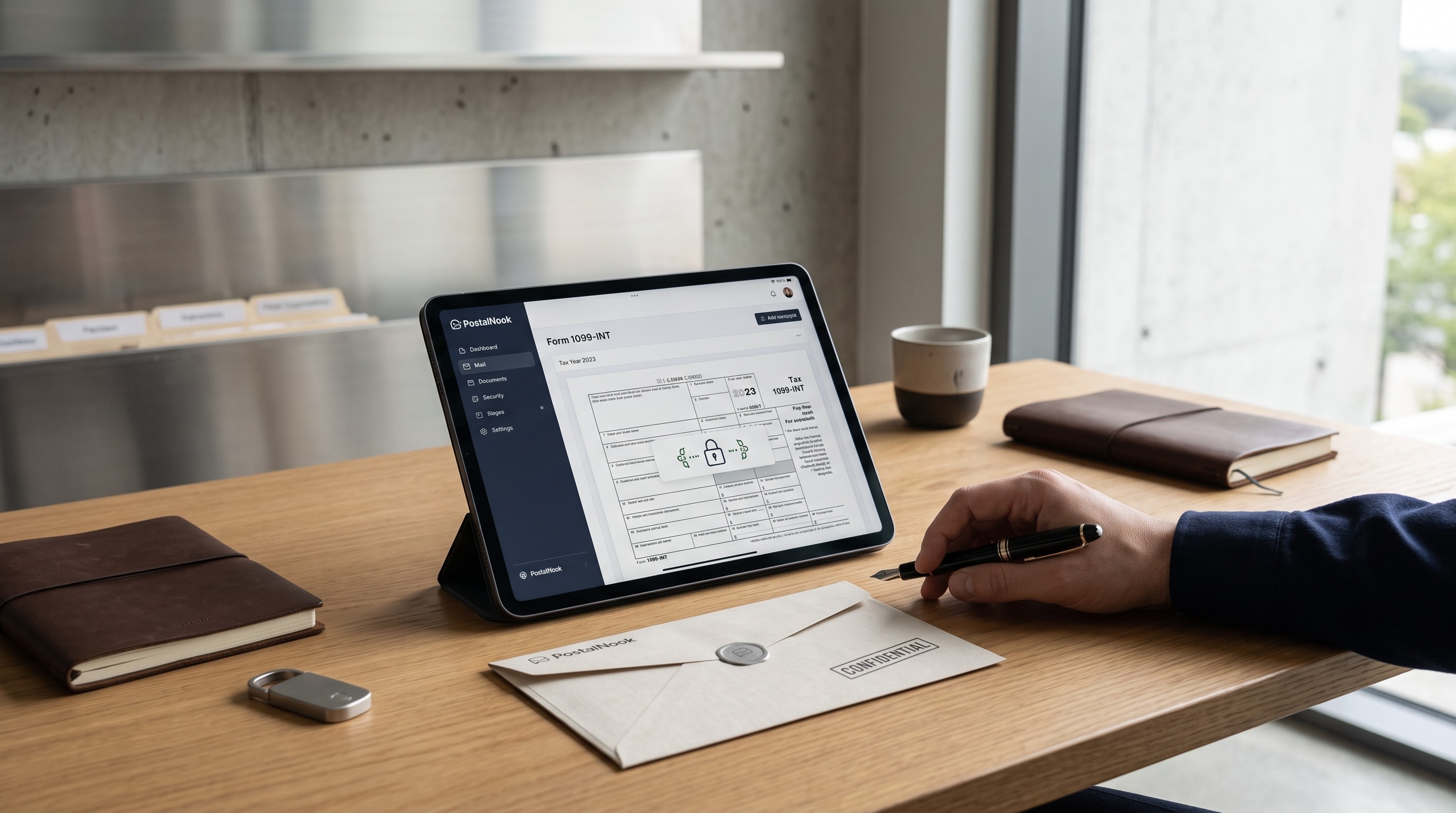
Receive tax documents securely anywhere. Learn how digital mail services handle IRS notices, W-2s, and business filings with strict privacy.

Have a question?
We're here to help! Feel free to reach out. Just fill out the form below, and our team will get back to you as soon as possible.
Loading contact form…
Contact Us
We're here to assist you with any questions or concerns you may have.
(512) 358-1060
contact@postalnook.com
12856 N HIGHWAY 183 (RESEARCH BLVD) AUSTIN, TX 78750

Join our VIP Club
Exclusive deals, early access, and special perks for our valued members.