How Secure Mail Scanning Works: A Guide to Data Privacy
Date Published :
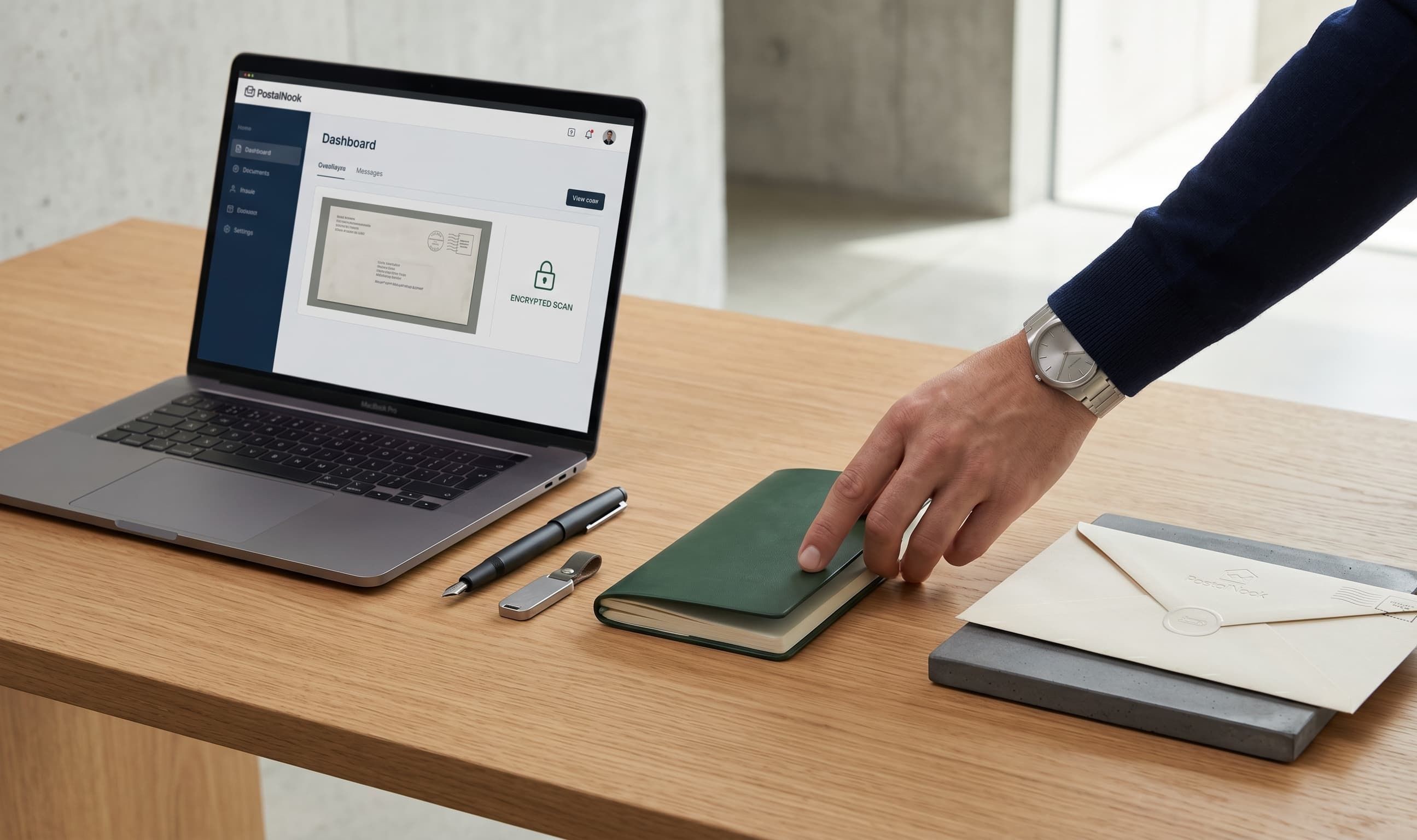
Most people feel a slight hesitation when they think about someone else opening their mail. It is a reasonable instinct. For business owners, expats, and frequent travelers, mail is not just paper. It is a collection of sensitive touchpoints: tax documents, legal notices, and private bank statements. When you transition to a digital mailroom, you are essentially trusting a third party to act as your physical firewall.
The question of how secure mail scanning works is usually less about the technology and more about the chain of custody. You want to know who touches the envelope, what happens to the paper after it is digitized, and how that digital file is protected from prying eyes. Security in this industry is a marriage of physical facility controls and high level digital encryption.
What happens when mail arrives at a secure facility?
The security process begins the moment a mail carrier drops a package or envelope at the processing center. In a professional mail management environment, this is not a casual mailroom floor. It is a restricted area.
At PostalNook, our founders leveraged their background in real estate and logistics to ensure our facilities operate with the same rigor as a high end secure storage site. Every piece of mail is logged into a tracking system immediately upon arrival. This creates a digital audit trail. The physical mail is stored in a monitored, climate controlled space until you provide instructions on what to do with it.
Technicians who handle the mail are vetted and trained specifically in privacy protocols. They do not simply "read" your mail. They facilitate a mechanical process where the mail is prepared for high resolution scanning. The goal is to move the document from the physical world to your private digital portal with as few human touchpoints as possible.
How is the scanning process protected?
The actual act of scanning is where many users worry about data leaks. To mitigate this, secure mail services use closed loop systems. This means the scanners are not connected to the open internet where data could be intercepted during the upload. Instead, they operate on a secure internal network.
Once a document is scanned, it is converted into a searchable PDF. During this conversion, the data is encrypted. Encryption acts as a digital lock. Even if a bad actor were to intercept the file, they would see nothing but scrambled code. Most high end services use AES 256 bit encryption, which is the same standard utilized by banks and government agencies to protect classified information.
The physical document does not just sit on a desk after the scan is complete. It is returned to a secure, numbered folder. You then decide whether you want the original forwarded to your current location, archived for a specific period, or destroyed.
What about the "Right to Erasure" and physical shredding?
A significant part of mail security is knowing when to let go. If you request that a document be shredded, it should not just be tossed into a wastebasket. Professional mail services utilize industrial grade cross cut shredding. This process turns your documents into confetti like strips that are impossible to reconstruct.
Once the physical paper is destroyed, a certificate of destruction is often logged in the system. On the digital side, security is about access control. You should have the ability to manage your digital archive, including the permanent deletion of files from your dashboard. Our global reach allows us to maintain these high standards across different jurisdictions, ensuring that whether you are in a different state or a different continent, your privacy remains intact.
If you are curious about the logistics of moving your documents, you can read about our mail forwarding options to see how we handle the transition from our facility to your doorstep.
How do I know my digital dashboard is safe?
The security of the scan is only as good as the security of the platform where you view it. A professional mail management service should feel like a secure banking app. This includes several layers of defense:
- Two Factor Authentication (2FA): This requires a second form of identification, such as a code sent to your phone, before anyone can log in.
- Session Monitoring: The system should automatically log you out after a period of inactivity to prevent unauthorized access if you leave your device unattended.
- Audit Logs: You should be able to see a history of when your account was accessed and which documents were viewed.
Transparency is the antidote to anxiety in the digital mail space. You are not just buying a scan; you are buying a managed environment where every movement of your information is accounted for.
Integrating mail scanning into your business workflow
For business owners, the security of mail scanning is often a compliance requirement. When you use a virtual business address, you are centralizing your corporate correspondence. This reduces the risk of mail being lost in transit or sitting in an unsecured residential mailbox.
By digitizing your mail, you also create a redundant backup of your most important records. In the event of a physical disaster at your home or office, your digital mailroom remains accessible. This level of organization provides a "business as usual" environment, regardless of where you are currently working.
Frequently Asked Questions
Explore our in-depth guide on virtual mailboxes—from key features and benefits to easy setup instructions. Perfect for individuals and businesses seeking a secure, efficient digital mail solution.
For tech enthusiasts seeking the best of American electronics and gadgets, PostalNook offers a revolutionary solution. With a secure U.S. virtual mailbox, you can order the latest tech, enjoy personalized consolidation, and receive your packages in one convenient shipment. Upgrade your tech game today by joining the growing community of Asian men who trust PostalNook for all their electronics needs.
.png&w=3840&q=90)
Discover how digital nomads can overcome mail management challenges with virtual mailboxes. Learn how to access, manage, and secure your mail anytime, anywhere while traveling the world.

Have a question?
We're here to help! Feel free to reach out. Just fill out the form below, and our team will get back to you as soon as possible.
Contact Us
We're here to assist you with any questions or concerns you may have.
(512) 358-1060
contact@postalnook.com
12856 N HIGHWAY 183 (RESEARCH BLVD) AUSTIN, TX 78750

Join our VIP Club
Exclusive deals, early access, and special perks for our valued members.